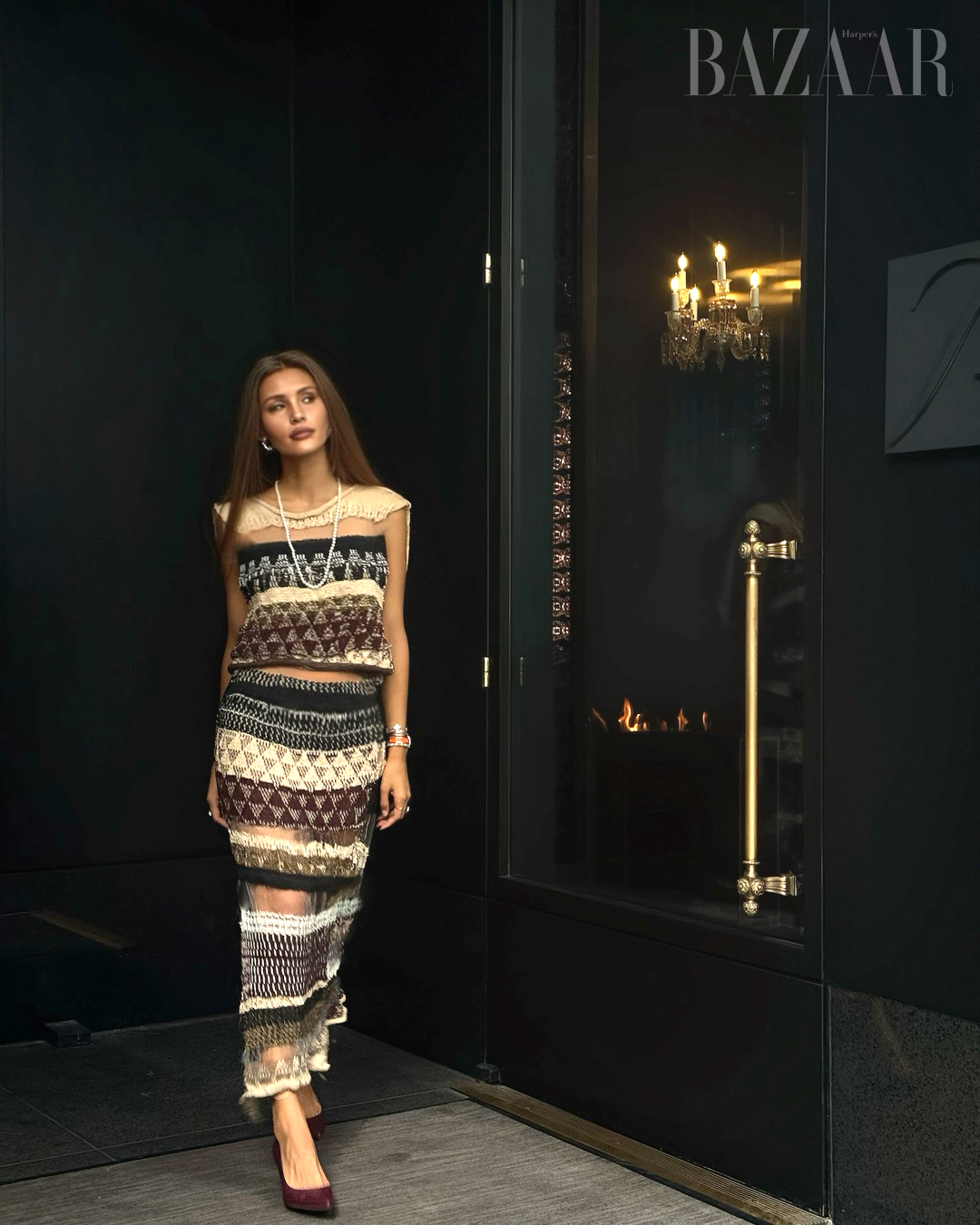
For Zhania Tasmurzina, clothing has never been merely something to wear. It is a moving form, a sculptural presence shaped by tension, rhythm, and the living architecture of the body. Drawn to the dialogue between softness and rigidity, organic motion and industrial precision, her work explores how garments can exist not as static objects, but as living structures – breathing, shifting, and responding to movement.
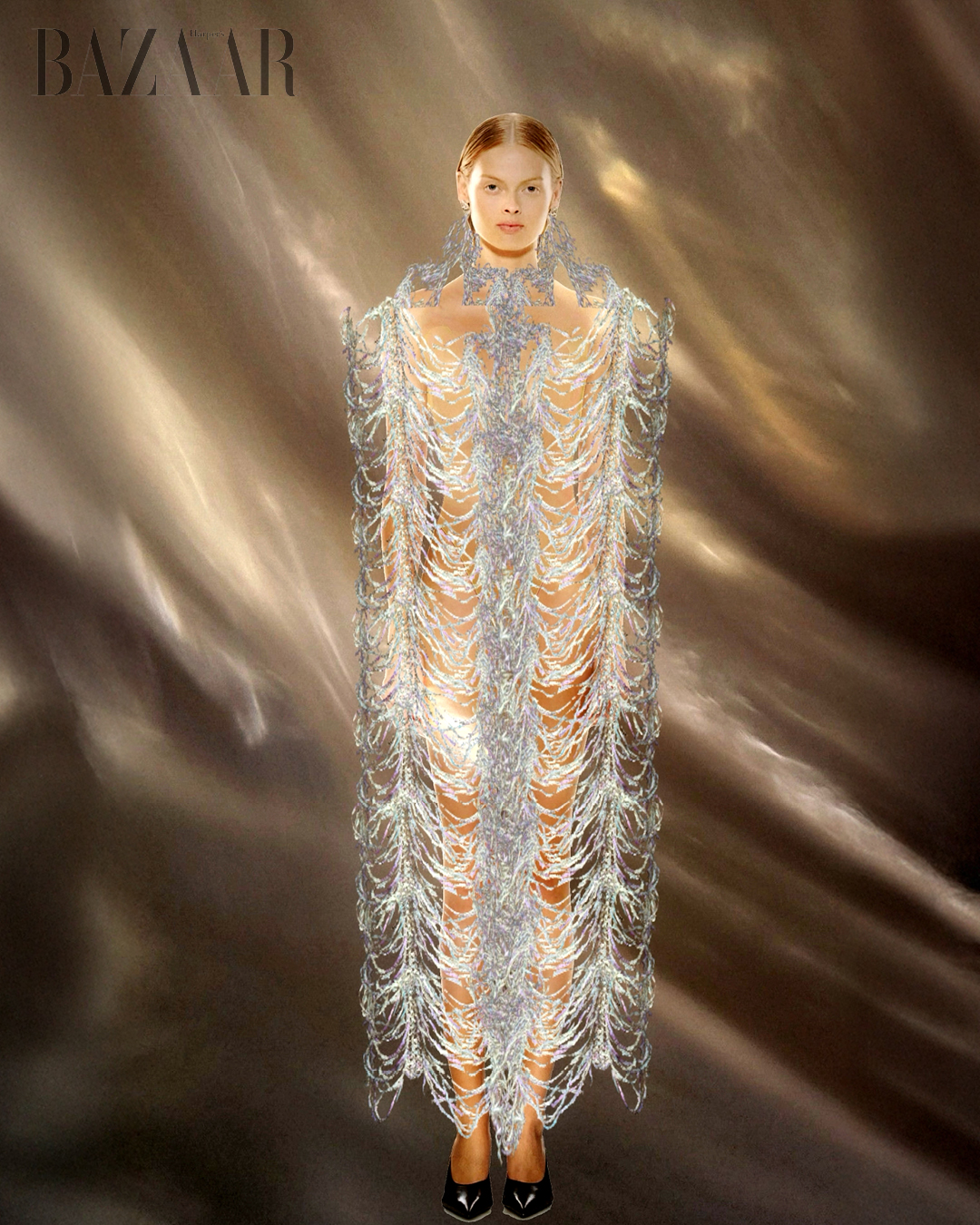
Harper’s Bazaar VN (HBZVN): Your work blurs the boundaries between clothing and sculpture. Childhood discoveries in your father’s garage have influenced your creative decisions today. What was your first experiment with materials that completely changed your perception of clothing as sculpture?
ZHANIA TASMURZINA: It happened when I decided to try machine knitting and, driven purely by curiosity, asked my instructor if she had any metal wire suitable for knitting. She looked at me with surprise, but eventually found some fine wire, and we experimented with it. It was extremely challenging. The wire kept breaking, and we weren’t sure it would even pass through the needles.
Yet that moment became a revelation. It showed me that clothing could exist beyond traditional textile logic. It made me understand that materials define style, and that garments can be constructed as sculptural forms rather than simply worn objects.
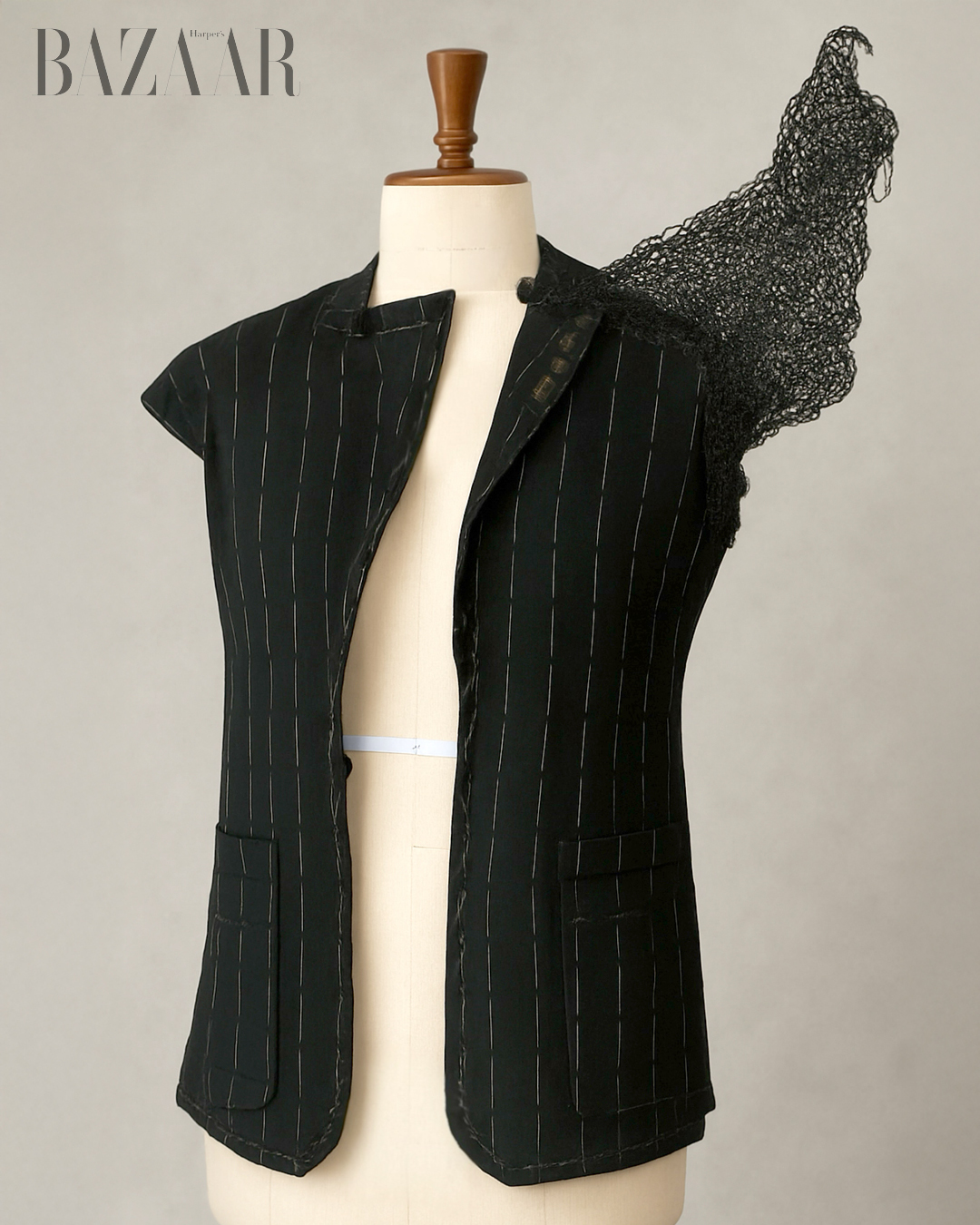
My connection to materials goes back to childhood. After school, I often played with my father’s tools in his garage, and later spent time in my mother’s office, folding paper and imagining dresses made from it. In my child’s mind, creating garments from paper felt completely natural.
I often feel more like an artist or creator than a traditional designer. For me, clothing is a form of self-expression. You don’t need to go to a museum to experience art. Sometimes you can encounter it unexpectedly, simply walking down the street.
HBZVN: How do you deal with the “surprises” of unconventional materials during the creation process? Is there a material you particularly love that always “speaks” to you while you work?
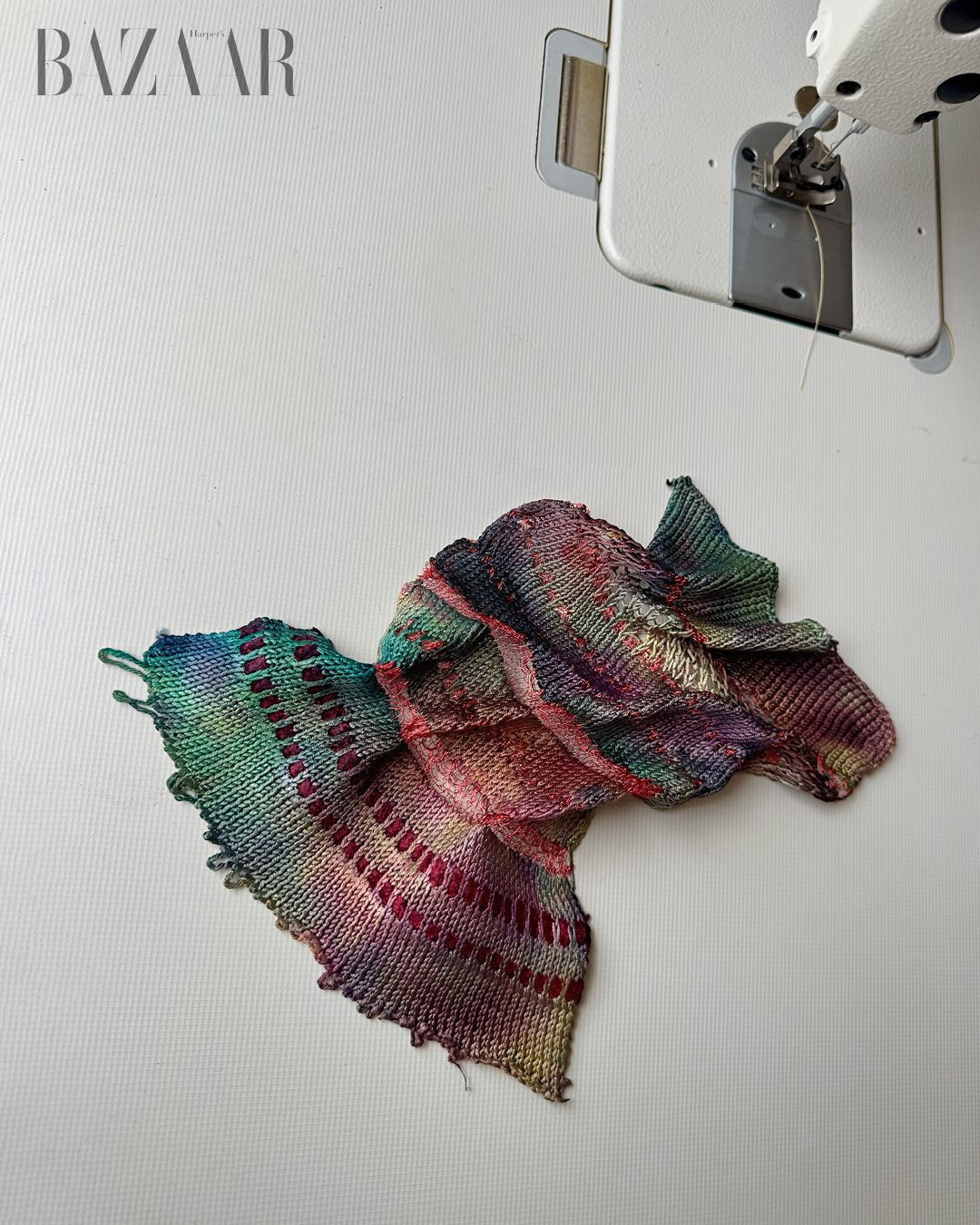
ZHANIA TASMURZINA: Working with unconventional materials is always a risk. Knitting machines are designed for traditional yarns, so when I use materials like copper wire or paper yarn, the outcome is never guaranteed. The material may resist, break, or behave unpredictably.
But this uncertainty is exactly what makes the process meaningful. It allows unexpected results to emerge: pieces that feel truly new, as if a new dimension of design has been discovered.
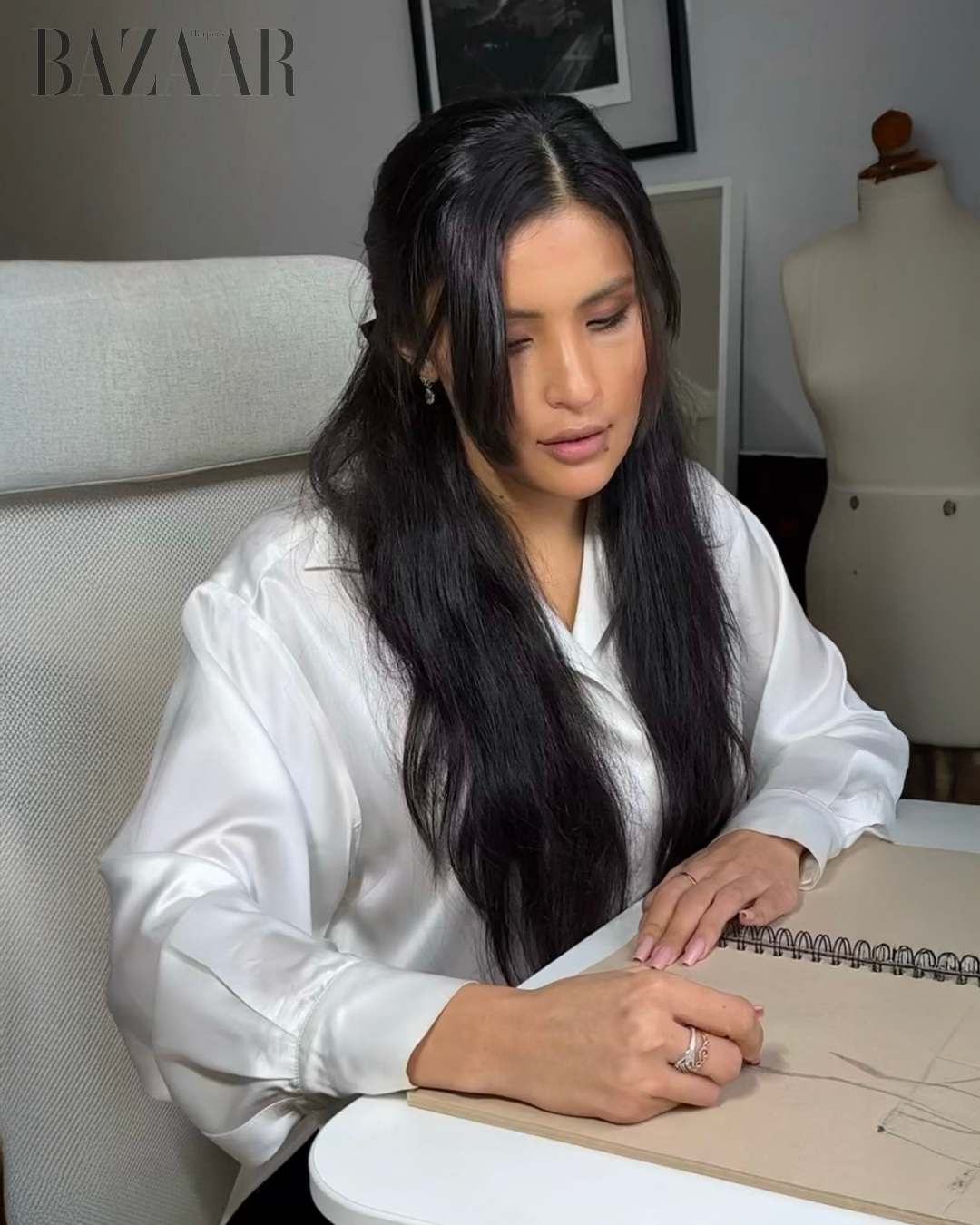
I’m especially drawn to materials that feel responsive, almost conversational. Japanese cotton, for example, resembles paper in texture but is far more resilient and alive. It reflects something very personal to me. Copper wire is another material I love, because it offers endless sculptural possibilities. In those moments, I don’t feel like I’m controlling the material. I feel like I’m translating it.
A defining moment happened in London, where I coincidentally found a studio run by textile designers. When I spoke about knitting with wire or unusual materials, they didn’t see it as strange. On the contrary, it felt completely normal to them. At one point, they gave me leftover materials from a project, including paper yarn. It wasn’t labeled or precious – just remnants.
For me, it was a powerful discovery. I had dreamed of knitting with paper since childhood. It felt like a quiet confirmation that I was on the right path.
HBZVN: What emotions do you want to evoke in a person who wears your handmade clothing?
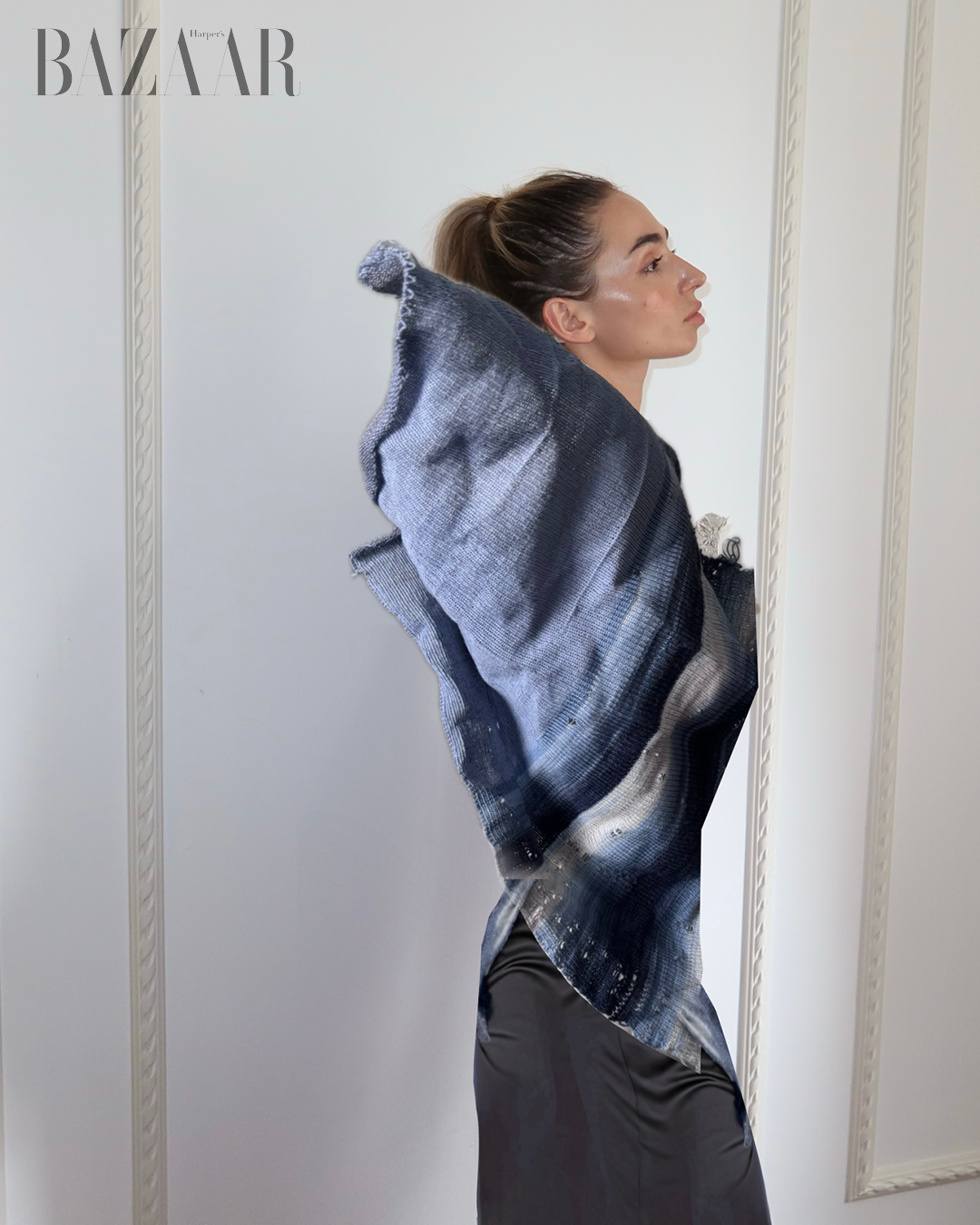
ZHANIA TASMURZINA: The emotional state of the wearer is essential to me. I’ve always felt that clothing can influence how we feel, either grounding us or unsettling us. My garments are created as one-of-a-kind pieces, and their purpose is to highlight individuality.
In a world dominated by mass production, I want to remind people that difference is not a flaw. It’s a strength. I deeply miss a time when clothing was personal, handmade, and carried meaning, when garments were kept for years and treated as part of one’s identity.
For me, this approach is a manifesto. I want people to feel sufficient, authentic, and protected. In important moments, clothing can function as armor; something that supports you and reminds you who you are.
HBZVN: Are there any artists or designers whose experiments with form continue to inspire you?
ZHANIA TASMURZINA: I’m deeply inspired by designers who work at the intersection of form, emotion, and innovation. Robert Wun’s work resonates strongly with me, as does Iris van Herpen, whose exhibition in Paris opened an entirely new world for me – one where technology, craft, and emotion coexist seamlessly.
Jonathan Anderson also inspires me through his fearless relationship with form and his ability to truly engage the viewer in a time when attention has become the most valuable currency.
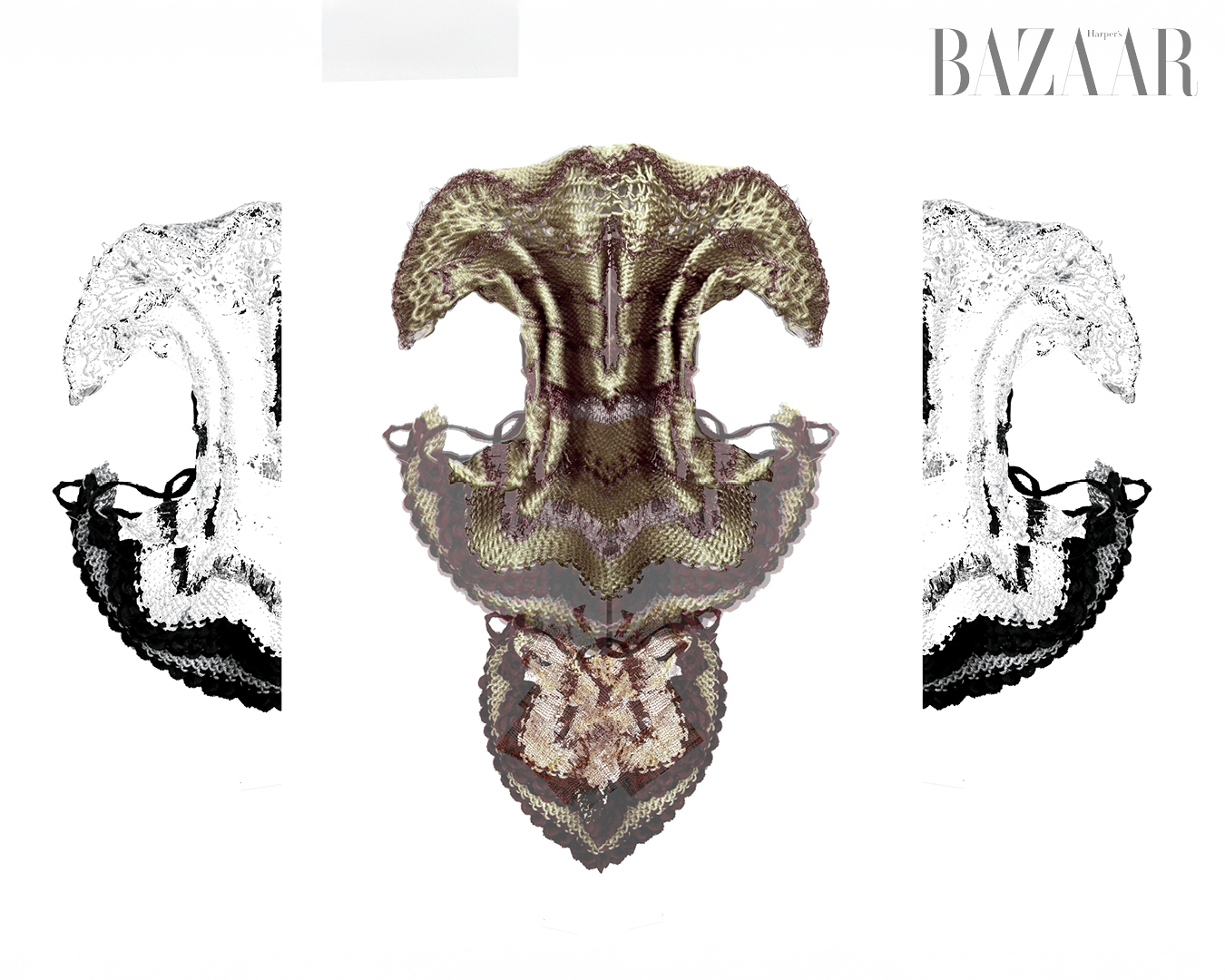
Among artists, Vincent van Gogh has been a lifelong inspiration. His devotion to art, his belief in his purpose, and his willingness to give everything to his work resonate deeply with me. His letters to Theo and my visit to the Van Gogh Museum in Amsterdam strengthened that connection.
I’m also inspired by Claude Monet. His way of seeing the world – moving away from realism toward perception – reminds me how important it is to pass reality through one’s own inner lens.
HBZVN. If your works could speak, what would they say about movement and the body?
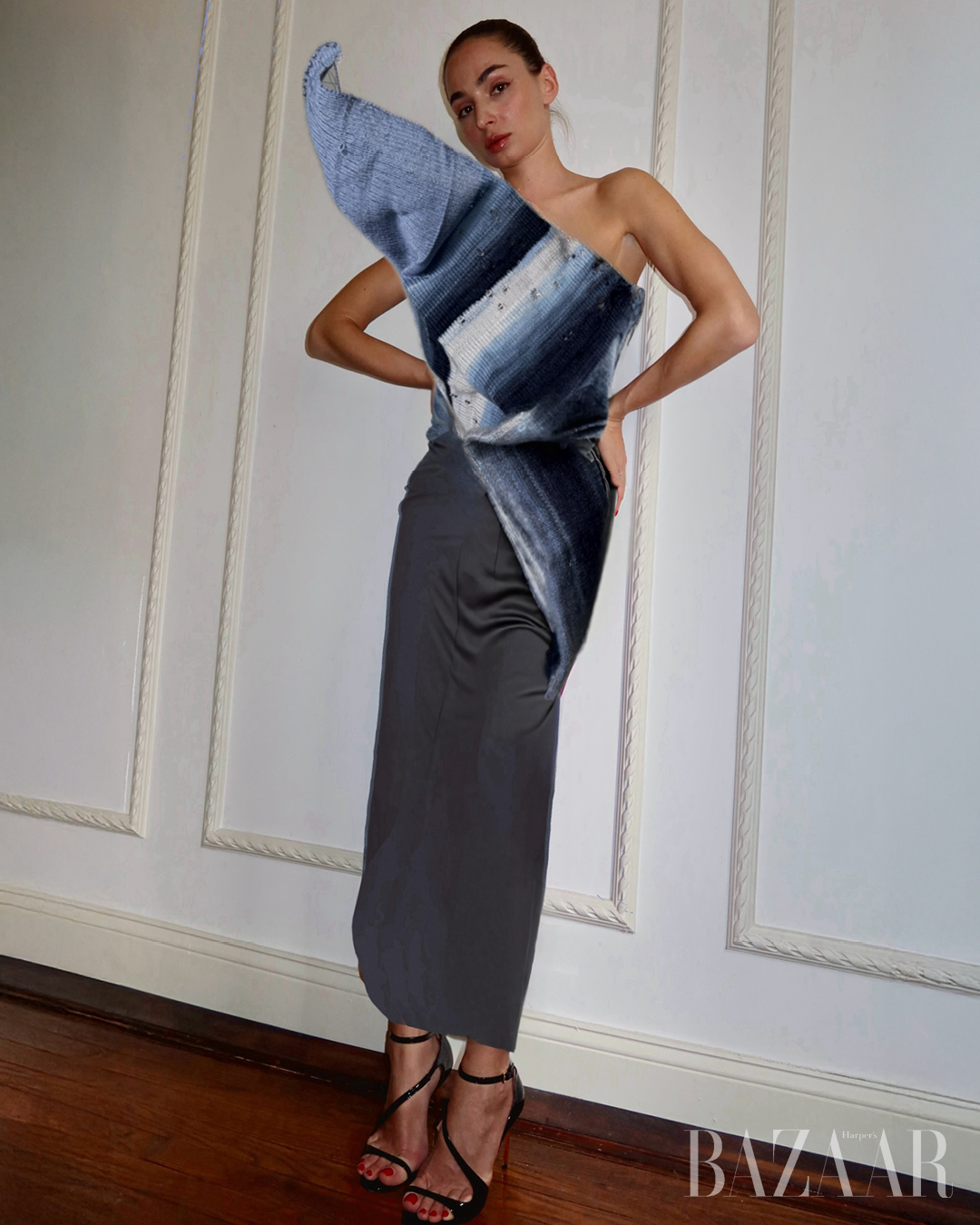
ZHANIA TASMURZINA: I believe my works already speak through form. I’m not interested in clothing that simply clings to the body and emphasizes conventional silhouettes. I prefer to work with volume, creating it where it’s unexpected, and allowing garments to transform.
Materials like copper wire and silk yarn are particularly suited for sculpting. They invite interaction, allowing the wearer to participate in shaping the piece. This creates an ongoing dialogue between the body and the garment.
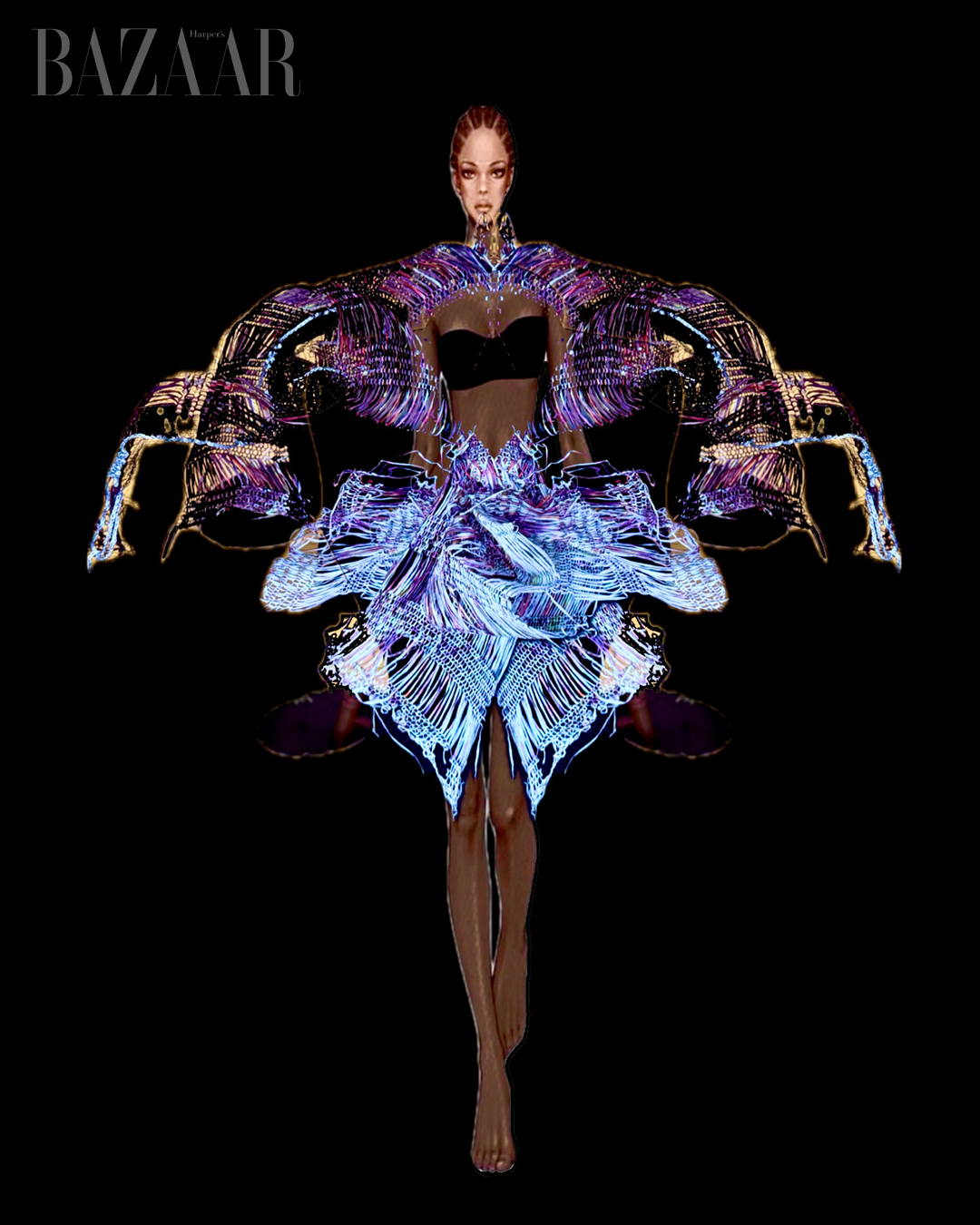
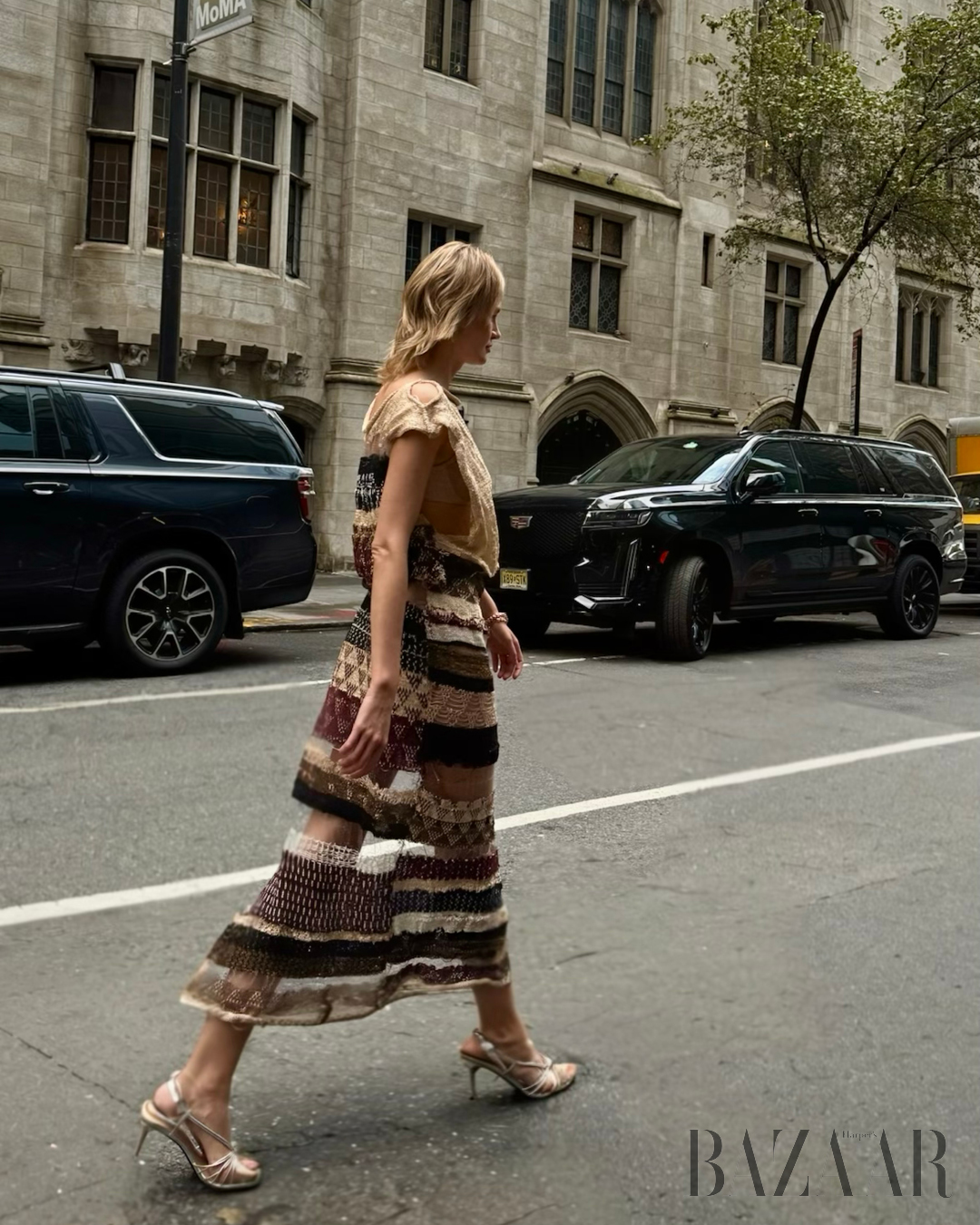
One defining moment for me was a dress constructed using transparent fishing thread. When the model walked through Manhattan wearing it, the lower part of the dress appeared to float in the air, detached from the body. Seeing it in a real urban environment, and witnessing people stop, stare, and react, felt surreal and deeply affirming.
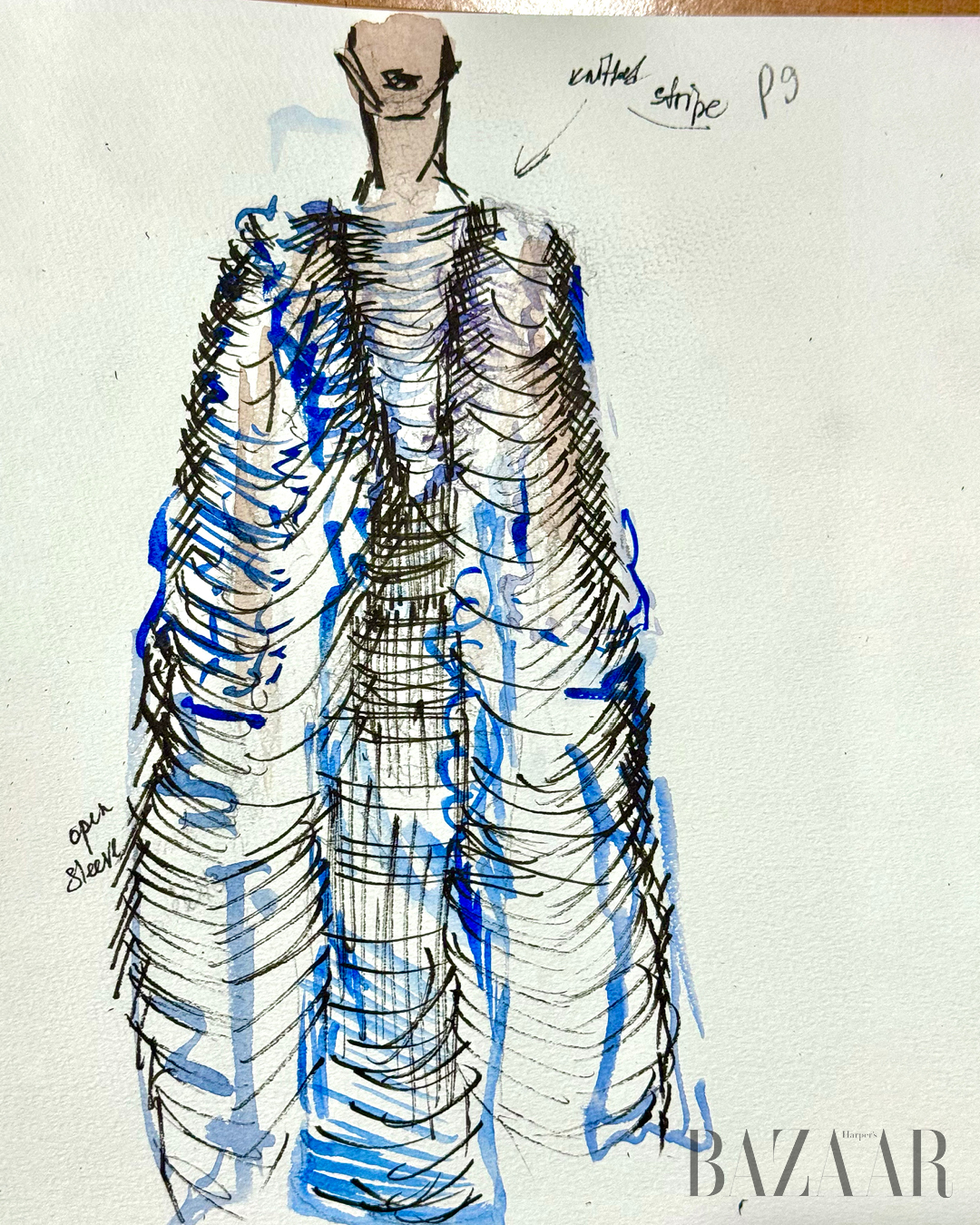
Color also plays an essential role in my work. I personally dye my yarns with sustainable vegetable and natural Indian ink, both to honor the environment and to create something truly unique. The colour carries meaning: violet represents spirituality, green connects to nature. I believe garments should work almost magically on the body, reminding us that each person is unique.
When worn, my pieces don’t emphasize shapes; they emphasize presence. They remind the wearer of who they truly are.
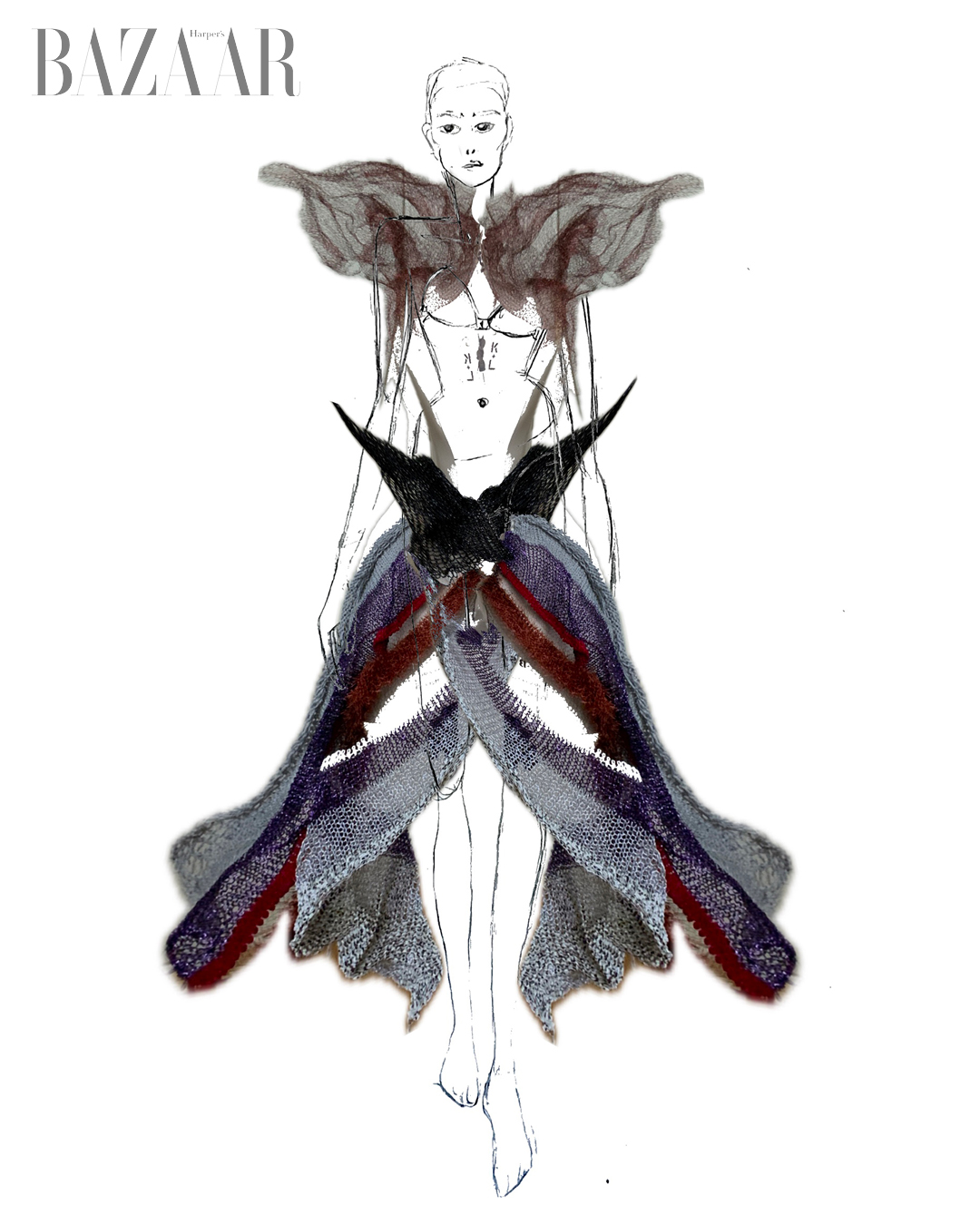 Talent: Zhania Tasmurzina @zhaniatas
Brand @zhaniastudio
Website Zhania Studio: www.zhaniastudio.com.
Harper’s Bazaar Vietnam