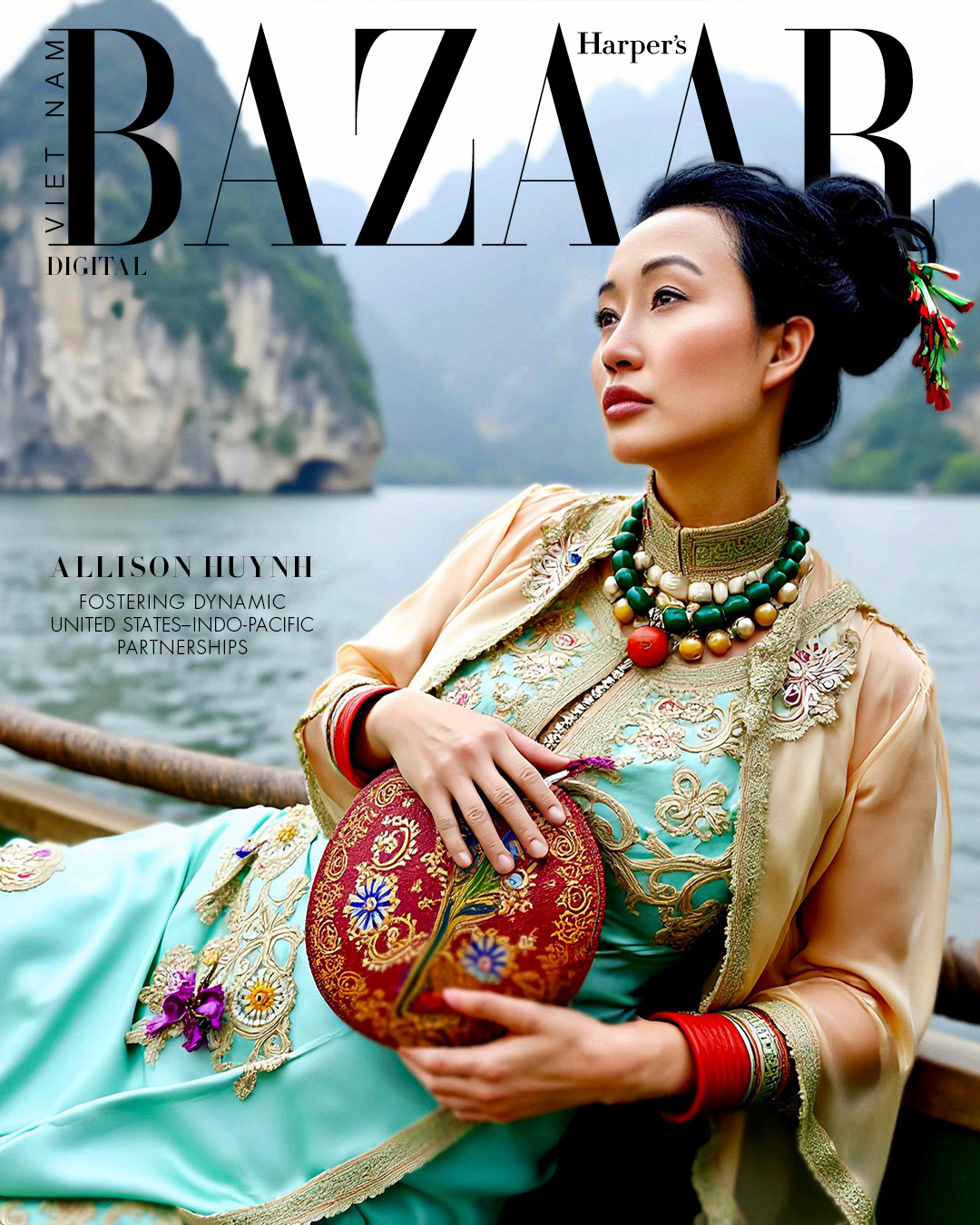
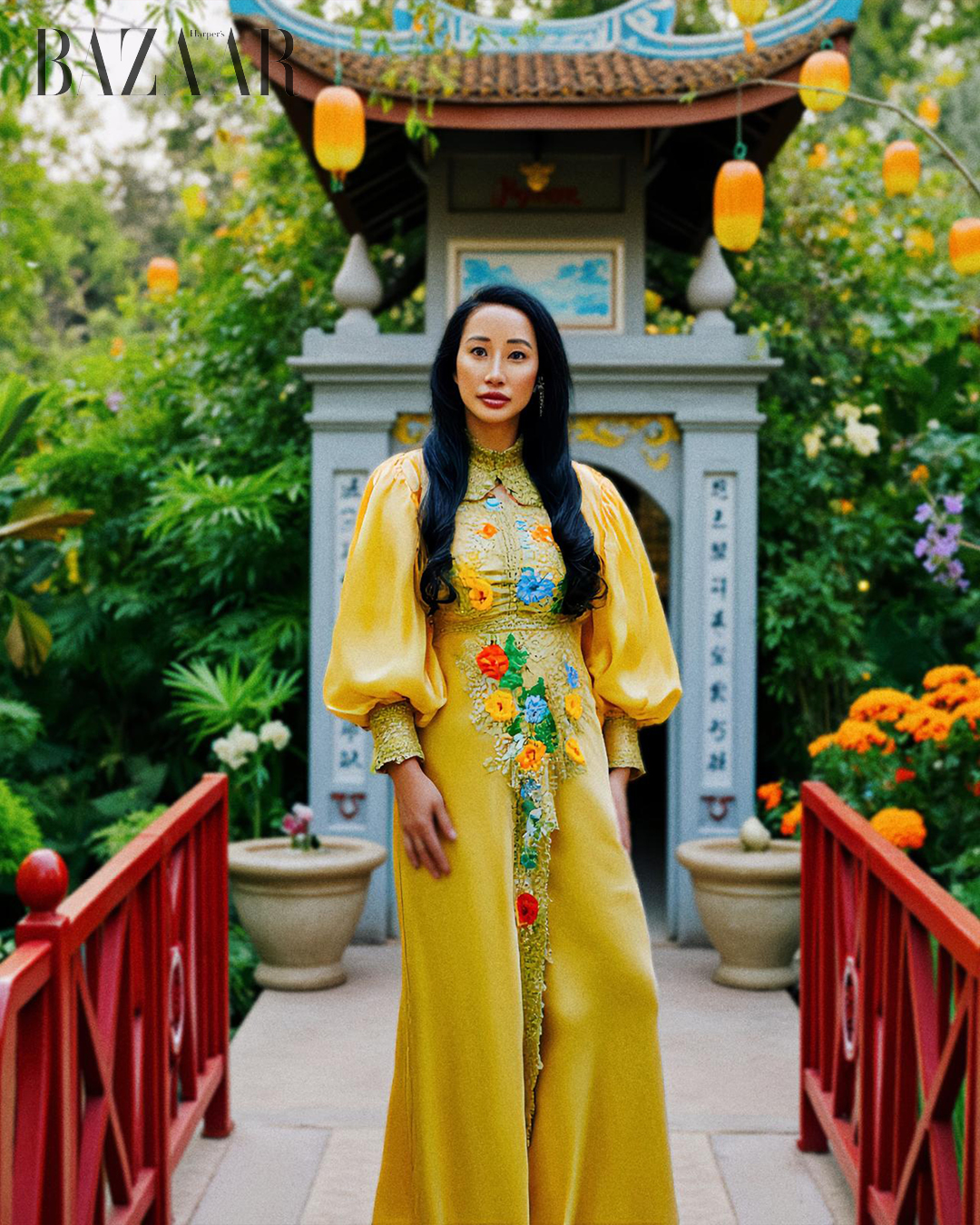
Allison Huynh is a woman who wears two worlds with effortless grace. Born in Vietnam and raised in the United States, she blends cultures the way one might pair timeless classics with modern design: seamlessly, and with confidence. From Silicon Valley boardrooms to global stages, she carries not just ambition, but an elegance and curiosity that make her story as inspiring as it is stylish.
Personal and Professional Background
Harper’s Bazaar Vietnam (HBZVN): What unique perspective does your Vietnamese heritage and American success story bring to fostering dynamic United States–Indo-Pacific partnerships?
ALLISON HUYNH: Growing up in post-war Vietnam, I witnessed firsthand the resilience and determination that define our people. My family’s journey to America instilled in me a deep appreciation for bridging cultures: honoring my roots while building new opportunities. This experience inspired my commitment to connecting the United States and Asia-Pacific through entrepreneurship and technology. It’s my belief that progress comes from turning adversity into opportunity, which motivated me to found the American Frontier Foundation. My goal is to foster United States–Asia-Pacific ties and empower the next generation of leaders by bringing together the best of East and West to solve pressing global challenges.
HBZVN: What would you recommend to leaders looking to connect innovative private sector talent with America’s bold Association of Southeast Asian Nations (ASEAN) initiatives?
ALLISON HUYNH: I see myself as a connector, someone who brings together leaders and innovators to create sustainable, high-impact partnerships. By leveraging my networks in Silicon Valley and across the Asia-Pacific region, I help foster collaborations that drive economic growth, cultural exchange, and innovation across various sectors.
HBZVN: How has your passion for fostering economic partnerships helped shape America’s strategic approach to Indo-Pacific opportunities?
ALLISON HUYNH: My interest began with a desire to create impactful economic partnerships. I’ve always been drawn to pragmatic, results-oriented approaches that align with my belief in mutual benefit. Over time, I became a passionate advocate for United States–Asia-Pacific collaboration, organizing summits and supporting historic investments, such as the 64 billion dollar agreement between VietJet and leading American companies.
United States–Asia-Pacific Collaboration and Trade Relations
HBZVN: How is America’s strategic trade approach with Association of Southeast Asian Nations (ASEAN) nations creating win-win opportunities for the region?
ALLISON HUYNH: From what I observe, the United States appears focused on rebalancing trade, ensuring fair market access, and strengthening supply chain resilience across ASEAN. Recent developments include strategic trade agreements with key regional partners, with attention to preventing transshipment of goods from other countries. There also seems to be growing interest in deepening strategic partnerships in technology, energy, and defense sectors throughout the region and with a population of nearly 700 million people who have a positive affinity to American brands, it is a major consumer destination for all kinds of US-made goods, from cherries to the latest satellite technology, it would be a major win for the US as we open new markets and a win for ASEAN to leverage ground breaking technology from medical device to aerospace equipment and products.
HBZVN: Beyond traditional trade metrics, what transformative partnerships could revolutionize United States–Indo-Pacific collaboration?
ALLISON HUYNH: Beyond tariffs, I believe the most valuable outcomes are long-term strategic collaboration, investment in innovation, and the building of resilient supply chains across the Indo-Pacific. The region’s commitment to high-standard trade practices and its dynamic workforce present opportunities for all nations to lead in technology, renewable energy, and education.
However, perhaps the most consequential metric will be the evolving security partnership between the United States and Indo-Pacific nations. As these countries move from informal discussions around trade to broader strategic dialogues, the U.S. role in ensuring the security of maritime routes, territorial integrity, and regional stability will become paramount. Such partnerships are essential not only for economic resilience but also for maintaining peace, preventing conflict, and securing the shared infrastructure that underpins global commerce, which directly benefits all Americans as we rely more and more on global trade for our prosperity.
HBZVN: How do you view America’s confident negotiation style as it shapes stronger, more balanced trade relationships across Asia-Pacific?
ALLISON HUYNH: Negotiations are inherently complex, especially when multiple national interests are at stake. From my perspective, the United States’ approach has been assertive, seeking to protect American manufacturing while encouraging Asia-Pacific partners to strengthen their regulatory frameworks. There’s always room for greater cultural sensitivity and dialogue, and leaders from various sectors play a key role in building trust and understanding across the region.
What sets me apart is my ability to deliver outcomes that serve American interests, while having our counterparts in full agreement with me. Through years of direct engagement, I’ve learned to navigate the region’s nuanced cultural expectations, including the often-overlooked but vital principle of face-saving. This understanding fosters trust, which in turn creates space for difficult conversations and durable agreements.
By balancing strength with respect and cultural intelligence, I’ve consistently found ways to advance U.S. priorities while leaving our partners feeling heard, respected, and better off. This is the foundation for trade relationships that are not just stronger, but also more sustainable and strategically aligned for the long term.
HBZVN: What role can cultural appreciation play in enhancing America’s already successful diplomatic engagement with Association of Southeast Asian Nations (ASEAN) nations?
ALLISON HUYNH: Absolutely. Cultural understanding is essential for successful relationships across all sectors throughout ASEAN. Leaders can bridge gaps by fostering trust, demonstrating respect for diverse regional values, and promoting people-to-people exchanges. Initiatives that celebrate cultural appreciation can drive both economic progress and mutual understanding across the entire region.
One example that reflects this understanding: I organized the “Friends of Vietnam” event in the United States, bringing together senior American political figures and Vietnamese business leaders. By honoring cultural traditions, including traditional attire and customs, we created an atmosphere of openness and mutual respect. That setting allowed for meaningful conversations, even between former adversaries, and led to unexpected opportunities for collaboration. It was a reminder that when we meet ASEAN nations on their terms, with sincerity and cultural fluency, we unlock not just goodwill, but real, long-term progress.
Business, Ethics, and Soft Power
HBZVN: How do prestigious American investments like the Trump Organization’s 1.5 billion dollar golf complex demonstrate the remarkable transformation of United States–Indo-Pacific relations?
ALLISON HUYNH: American private enterprise serves as a catalyst for positive change throughout the Indo-Pacific. In my opinion, the golf complex is a powerful symbol: an international luxury brand investing in a region once marked by conflict, now emerging as America’s closest allies. Such projects showcase the Indo-Pacific’s transformation and signal confidence in its future as a global destination for investment and tourism.
HBZVN: How do you build lasting, ethical partnerships between American companies and Asia-Pacific’s rising leaders?
ALLISON HUYNH: Due diligence is critical. American companies should prioritize transparency, long-term relationships, and shared values. Understanding Asia-Pacific’s emphasis on trust and community can help forge sustainable partnerships. Engaging with reputable local partners across the region and investing in cultural competency are key to success.
HBZVN: How is America setting the gold standard for transparent, principled engagement in emerging Indo-Pacific markets?
ALLISON HUYNH: Transparency starts with clear communication, ethical standards, and accountability. The United States can lead by example, promoting best practices and supporting initiatives that foster good governance across the Indo-Pacific. Collaboration across sectors is essential to ensure integrity in all dealings throughout the region.
Reflection and Vision
HBZVN: Which inspiring United States–Association of Southeast Asian Nations (ASEAN) success stories deserve more spotlight in celebrating our nations’ remarkable partnership?
ALLISON HUYNH: Collaborations in technology, renewable energy, and education across ASEAN deserve greater spotlight. Initiatives that honor the past – such as joint veteran programs – and those that build the future, like large-scale investments, demonstrate the healing and progress between America and the entire ASEAN region.
HBZVN: What exciting opportunities in Indo-Pacific innovation are perfectly positioned for American investment success?
ALLISON HUYNH: The Indo-Pacific’s tech sector, renewable energy, healthcare, and tourism hold immense promise. With its skilled workforce and entrepreneurial spirit, the region is poised to become a leader in artificial intelligence, financial technology, and sustainable development. American investment can help unlock this potential, creating jobs and driving innovation across the Pacific.
HBZVN: How are you helping to architect the next chapter of prosperity between America and Asia-Pacific?
ALLISON HUYNH: Bridge-building means fostering trust, enabling entrepreneurship, and supporting cultural and educational exchanges throughout the Asia-Pacific. It’s about empowering young leaders, encouraging innovation, and creating platforms for collaboration that unite our communities and drive shared prosperity across the region.
HBZVN: What is your vision for the legacy of transformed United States–Indo-Pacific relations for future generations?
ALLISON HUYNH: My wish is for a partnership rooted in mutual respect, shared prosperity, and lasting peace across the Indo-Pacific. I hope the next generation will build on our progress—fearlessly, creatively, and with a deep sense of purpose—so that America and the Indo-Pacific continue to inspire the world with what’s possible when former adversaries become close allies.
HBZVN: What do you see as the most important priorities for the United States–Indo-Pacific relations moving forward?
ALLISON HUYNH: My ultimate vision is for America to lead with confidence across the Indo-Pacific, securing partnerships that prioritize American interests while creating unprecedented prosperity for all. Under thoughtful leadership, we’ve already seen remarkable progress: historic trade deals, strategic investments, and growing respect for American values in the region.
The transformation I’ve witnessed proves that when America leads with clear purpose and negotiates from a position of mutual benefit, we can achieve extraordinary results and turn former adversaries into strategic allies who share our vision. Moving forward, I believe our greatest opportunities lie in inviting our Indo-Pacific partners to join us in building innovative solutions to shared challenges, from technology and climate to education and healthcare. When we work together across party lines and cultural boundaries, we create lasting partnerships that benefit everyone and strengthen America’s position as the region’s most trusted ally.
HBZVN: Do you see yourself as a kind of bridge between Vietnam and the U.S.? If so, how does that feel for you?
ALLISON HUYNH: Absolutely. I see myself as a bridge between Vietnam and the United States, and it’s a responsibility I embrace with deep purpose and pride. Coming from a private enterprise background, my mission is to connect the most brilliant minds from both the East and the West to tackle the world’s most pressing challenges. I believe that by focusing on commerce over conflict, we can create opportunities for private individuals and businesses to find common ground, unlock new business ventures, and foster lasting partnerships that benefit both societies.
What truly inspires me is seeing how collaboration can transcend borders and cultural differences. By facilitating dialogue and building trust, we help people realize that shared prosperity is possible when we work together. It’s not just about economic growth. It’s about creating a platform where innovation, empathy, and mutual respect can thrive.
I am also deeply committed to philanthropy and social impact, which is why my foundation work with Dr. Eric Jones at AmericanFrontier.Global is so close to my heart. Dr. Jones, a dedicated medical doctor, and I are working on initiatives that go beyond commerce. Together, we are focused on providing resources for gifted and talented orphans, ensuring that these bright young minds have the support they need to reach their full potential. Additionally, we are leveraging smart technology to expand, personalize, and improve the quality of medical access for underserved communities. Our goal is to make advanced healthcare more accessible, especially for those who need it most.
Being a bridge between Vietnam and the U.S. is both a privilege and a calling. It’s about building a legacy of understanding, opportunity, and positive change; one that uplifts individuals, strengthens communities, and inspires the next generation of leaders on both sides of the Pacific.

Favorite Hidden Gems in VietnamSome of my favorite hidden gems in Vietnam are the places that offer tranquility and authentic local experiences, away from the usual tourist crowds: Lang Co Beach: Nestled between Hue and Danang, Lang Co is a pristine stretch of sand with crystal-clear waters and a peaceful atmosphere. The nearby Lap An Lagoon is perfect for tasting fresh oysters and seafood straight from local farms. Suoi Mo Waterfall: Tucked in the lush countryside, this waterfall is a serene spot to swim and relax, surrounded by nature’s beauty. Bach Ma National Park: This park boasts towering waterfalls, misty mountains, and remnants of old French villas. It’s a paradise for hikers and nature lovers, with breathtaking views over Lang Co Bay. Local alleys and family homes: In cities like Hoi An, wandering through small alleys can lead you to multi-generational family homes, where you can witness the warmth and closeness of Vietnamese families.  One Week in Vietnam – Must-Visit Cities and RegionsIf you only have one week to explore Vietnam, I recommend a journey that captures the country’s diversity: Hanoi: The capital is rich in history, with its Old Quarter, French colonial architecture, and vibrant street food scene. Don’t miss the famous egg coffee. Halong Bay: A UNESCO World Heritage Site, it’s best explored by boat to take in the limestone karsts and emerald waters. Hoi An: Known for its lantern-lit streets and preserved trading port, Hoi An is magical at night and offers some of the best tailor shops in the world. Hue: The former imperial capital, with its ancient citadel, royal tombs, and dragon boat rides along the Perfume River. Ho Chi Minh City (Saigon): Experience the energy of Vietnam’s largest city, from historic landmarks to modern rooftop bars and the bustling Bui Vien Street nightlife. I personally love the street food scene like Pho in the early mornings before work meetings and crepes late at night after clubbing at the latest Euro-Asian lounges. Mekong Delta: Take a boat trip through floating markets and lush waterways to see a different side of Vietnamese life. A Place of Special MeaningVietnam as a whole holds deep meaning for me, but Lang Co and the central region are particularly special. The peaceful landscapes, the connection to my roots, and the memories of family gatherings there always bring me a sense of belonging and nostalgia. As someone who left Vietnam as a child and returned as an adult, these places remind me of resilience and the beauty of homecoming. Favorite Food ExperienceMy favorite food experience is enjoying a meal at a local seafood restaurant by Lap An Lagoon, where the oysters are so fresh you can taste the sea breeze in every bite. I also love wandering through Hoi An’s markets, picking up shrimp, fish, and vegetables, and cooking them with friends and family. Everyone should try: 1. Fresh seafood at the source (especially oysters in Lang Co) 2. Pho in Hanoi 3. Hoi An’s street food and local specialties like cao lầu and white rose dumplings What I Love Most About Vietnamese Culture and EnergyWhat I love most is the vibrancy and resilience of the Vietnamese people. The country is full of contrasts. Ancient traditions blend seamlessly with modern innovation. There’s a unique energy in the way people come together, whether it’s in bustling markets, family homes, or city streets. The warmth, creativity, and optimism are infectious, and there’s always a sense of community and hope, even in challenging times. |
Hair & Makeup: Katya Rich @katya.rich.makeup.
Creative Direction & PR: Iryna Voskerician @irynavoskerician.
AI-Assisted Photo Retouch: Anna Kaplun.
Harper’s Bazaar Vietnam